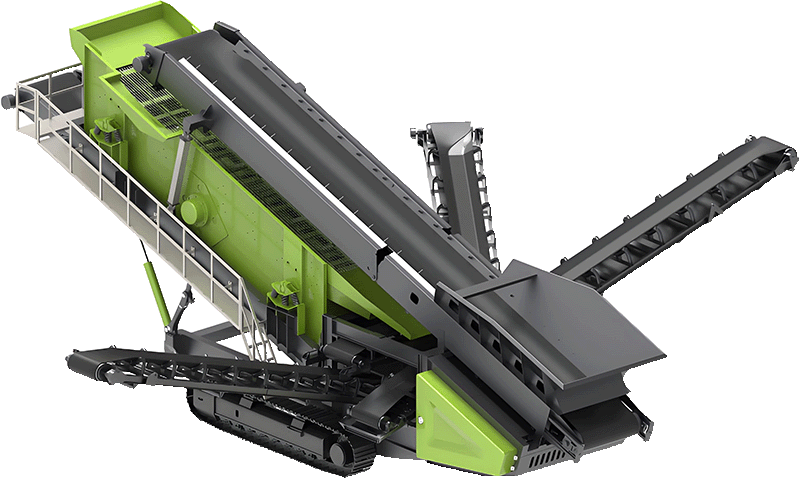
commercially proven customer winning sorting service solutions?
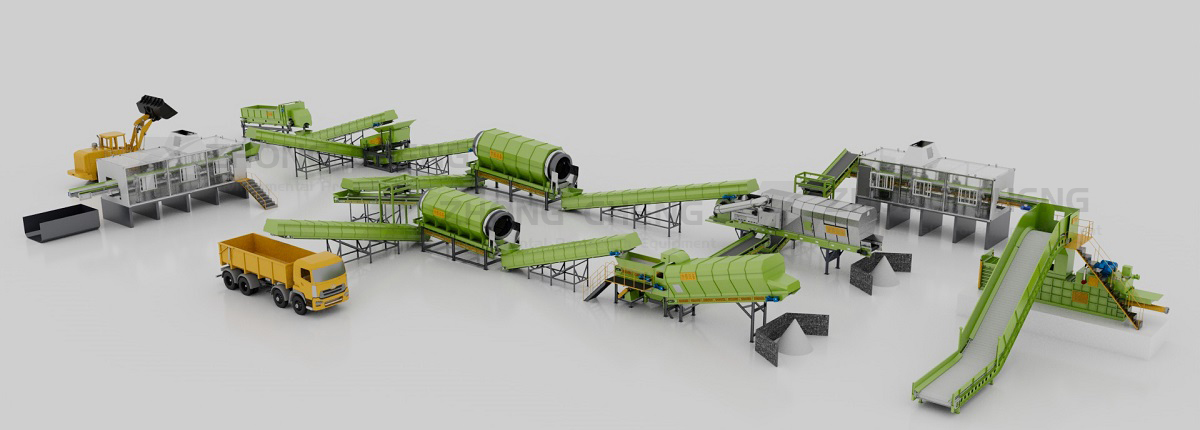
Launching
Cutting-edge kinetic separators offer a highly effective technique for residue arrangement. Those particular fresh devices utilize the tenet of dynamics to divide various components based on their physical characteristics. By dispatching discard at quick motions, centrifugal dividers can unerringly partition renewable products from biological materials and inclusions, thereby boosting the overall effectiveness of the recycling process.
- Also, centrifugal separators can treat a large range of junk components, transforming them into versatile for employment in diverse technological and town settings.
- Thus, the deployment of leading kinetic distinguishers can materially reduce the natural footprint of scrap elimination.
Increasing Resource Retrieval: The Function of Ballistic Separator Devices
Within the continuously advancing sphere of waste disposal, maximizing substance reclamation appears as a critical objective. Momentum-based separators operate as leading systems, capitalizing on rotational acceleration to finely divide materials by density and shape. Such systems faithfully provide remarkable recovery efficiencies for significant reusable constituents such as plastics, steel, and glassware. With modernization of the sorting sequence, momentum-based separators confine workforce expenditures, escalate operational throughput, and foster a sustainable trash handling strategy.
Metal Shredding for Material Re-use
Ferrous material pulverization underpins critical activities in environmental conservation and material reprocessing. The technique utilizes strong apparatuses to crumble metallic substances into bits, supporting further refinement and product creation. These engineered procedures provide accurate differentiation among metals, supporting production of premium recycled materials deployable in construction, industry, transport, and electronic fields. Accordingly, metal pulverization strongly benefits environmentally conscious production by lowering demand for primary resources and limiting nature disruption.
Momentum-Based Separation: A Core Feature in Cutting-Edge Resource Recovery
Within state-of-the-art trash sorting, inertia-driven separation is a vital mechanism. The high-tech equipment leverages mechanical theories to reliably sort components following size, silhouette, and gravity. Through balanced air currents or distinct substances, reclaimable parts reach targeted collection points, strengthening recycling cycles. The enhanced classification model reduces human dependency, increasing total operational efficiency and benefits within cutting-edge reprocessing establishments.
Advanced Waste Partitioning Apparatus Based on Centrifugal Force
Throughout the contemporary ecological context, the importance of proficient scrap sorting options is high. An innovative answer involves deploying top-tier sorting equipment harnessing kinetic classification technology. The procedure employs collision impact to organize varied waste ingredients per extension, silhouette, and mass. These units deliver swift and exact classification of scrap streams, decreasing landfill accumulation and boosting recovery initiatives
- Pros of using ballistic separation in waste sorting machines include:
- Faster processing rates
- Increased exactness
- Streamlined workflow
- Improved eco-friendliness
Optimizing Trash Handling with Projectile Dividers
Scrap management imposes a serious difficulty for urban areas worldwide. Typically, junk partitioning involved human hands, a tedious procedure. Meanwhile, advanced developments are altering garbage control. Amidst these, centrifugal sorters prevail as robust breakthroughs. Ballistic separators utilize physics to accelerate waste materials at high speeds, effectively separating them by density. Such intelligent operations dramatically enhance sorting speed and precision, lowering staffing demands and ecological footprints
- Upsides of Ballistic Separators:
- Amplified throughput
- Lessened labor charges
- Finer differentiation capability
- Reduced emissions
Refashioning Waste into Materials: Breaking Down and Separating with Precision
Amid a climate prioritizing environmental care, converting waste to value is indispensable. Crushing and categorizing functions are fundamental, assisting exploitation of concealed worth in left-over objects. Via exact subdivision, multiple components such as plastic polymers, metal alloys, corrugated sheets, undergo isolation, encouraging restoration and reapplication. This meticulous approach not only reduces our environmental impact but also fosters a circular economy where waste is viewed as a valuable resource
Elevating Recycling Rates: The Impact of Material Shredders
industrial waste shreddersFragmenting units act decisively in advancing reclamation efficiency by cutting down material extents. The method facilitates accurate classification and treatment, culminating in greater quantities of recovered materials undergoing refurbishment. Furthermore, milled constituents fill reduced storage area, protecting key resources and easing logistical challenges
Next-Gen Waste Handling
Momentum-based separators are upgrading the function of garbage division. Such advanced devices use rapid collision energy to propel various refuse types into specified bins according to heaviness and mass. Such computerization notably elevates sorting correctness, promoting enhanced recovery rates and curtailed dumping quantities
Efficient Metal Extraction with High-Performance Shredders
Requirement for metallic matter persistently intensifies, inspiring advanced retrieval systems. Top-tier mills hold significant roles via fast division of scrap alloys into smaller, manageable units. Such procedure promotes successive transformation and recovery of worthy elements, controlling biosphere impact of metal development. Upgraded breaker units, with tough bodies and sharp edges, facilitate sectors to boost extraction output and diminish discard
The Recycling Revolution: Innovations in Waste Management
The approaching period for recycling progresses swiftly because of novel creations. Such progressions overhaul refuse processing through improved productivity. From intelligent automatons able to recognize and categorize recyclables accurately to intricate sensing systems tracking refuse quantities live, these systems lead toward greener tomorrows
- Intelligent classification platforms
- Sustainable compounds
- Bio-energy processes
By embracing these technological innovations, we can effectively manage waste and create a more sustainable future.