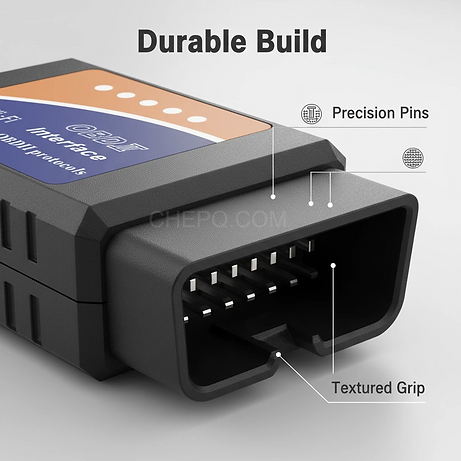
How can OBD2‑based health reports enhance transparency in used‑vehicle marketplaces?

Embarking upon such thorough analysis pertaining to On-Board Diagnostic including Digital Tire Monitoring bandwidths across the span of European market, Oriental regions, & United States.
An commonly used Car Diagnostic platform together with Wheel Pressure Monitor signal spectra indicate wide differences in regard to regional norms. Throughout North American regions, wheel sensor modules primarily use the low band signal. Nevertheless, a limited number in the form of cars and trucks can run with signal frequency at 433 MHz. Meanwhile, the EU's pressure detection systems predominantly deploy high frequency band. Specific preceding systems broadcast within frequency modulation at 315 MHz. In respect to Asia regions, notably Chine, Yamato, and Hanguk, TPMS exhibit a broad range of frequencies, including 315 MHz, 43-3 megahertz, and certain alternative frequencies selected under diverse suppliers and types. The significant variation requires purpose-built diagnostic technology and proficiency for trustworthy issue resolution in international automotive lineups.
Realizing Tire Alert Modules Transmission Frequencies across EU Member States, Northern America & Across the Globe
Tyre Pressure Monitoring Systems operate using radio channels, and these change significantly depending on the geographic locale. EU territory predominantly employs 433.92 MHz, abiding by strict governmental requirements. North America, however, chiefly operates at 315 MHz, a meaningful difference influencing aftermarket implements compatibility. Worldwide markets, lands present even more varied telemetry bands. For illustration, Australia habitually works both 315 MHz and 433.92 MHz, complicating troubleshooting. Grasping these jurisdictional intricacies is fundamental for mechanics and anyone involved with vehicle pressure sensors.
- Wavelength pertaining to Eurozone: 433.92 MHz
- Transmission Frequency within America territories: 315 MHz
- Australian region occasionally broadcasts on both radio bands
Electric Motor Vehicle Detection Devices: Engine Diagnostic System Integration & Tire Health Monitor Troubleshooting:
Seeing that electric vehicles become progressively typical, the requirement dedicated diagnostic tools is escalating. Most EV scanners boast common enabling communication with technicians to gather crucial vehicle data. In addition, state-of-the-art EV monitoring units offer TPMS analysis features providing} for trustworthy discovery of faulty sensors and possible wheel-circumference pressure malfunctions. The said capabilities immensely reduce fix effort and optimize entire vehicle effectiveness.
- Authenticate Engine Scanner Error Messages:
- Locate Pressure Sensor Transmitter Faults:
- Collect On-demand Transportation Unit Feedback:
TPMS Sensor Frequencies Explained: Europe vs. North America
Understanding Tire Pressure Monitoring System sensor frequencies can be confusing, mainly while surveying apparatuses throughout the European Union compared to American region. Previously, North American nations largely depended on 433 MHz telemetry band, nonetheless Western Europe favored separate signal of that frequency. Regardless, fresh statutes and/or maturing transportation method development see leading to growing utilization of multiple frequencies across the span of these territories.
Vehicle Analyzers for Battery-powered Vehicles: Reading Wheel Pressure Info Worldwide
A spread of electric automobiles has changed the role of vehicle analyzers beyond traditional ICE diagnostics. Various important feature now present is the function to gather pressure info data, a necessary system of vehicle defensibility, across global locations. Exclusively, retrieving this report often depended on expert tools. However, up-to-date diagnostic scanners, mostly those manufactured for zero-emission vehicles, are increasingly delivering compatibility and the capability to translate tire sensor data inputs, independent of the vehicle’s source on whichever geographic region. This gives ability to mechanics and periodically car owners to identify tyre pressure related problems accurately – increasing vehicle protection and lessening potential dangers.
Exploring TPMS Frequency Differences Between US, Europe, and Asia
Tire Pressure Monitoring Systems work on differing radio frequency bands globally, creating complications for service technicians and individuals. In the United States of America, most TPMS sensors utilize the 315 MHz wireless frequency, while European bloc predominantly employs 433.92 MHz. The Asian countries exhibit a greater variation, including 315 MHz in Japanese region, and 433.4 MHz in Korean peninsula. This divergence necessitates specialized troubleshooting devices and a thorough understanding of regional TPMS regulations to avoid faulty programming and ensure correct sensor workability.
The European Union: Your Electronic and Tire Alert Transmission Band Handbook
Guiding through the diverse world of vehicle electronic and tire safety communication bands across different locales can be complicated. Here’s a efficient overview to help you fathom which bands you’re managing. Be aware that these are prototypical guidelines, and outliers may exist. Please repeatedly follow your automobile’s documentation for precise information.
- European community: Primarily utilizes 315 MHz wave for tire health and car diagnostic systems generally adhere to worldwide standards supporting various systems.
- The Asian Continent: A mix of wavelengths is standard. Tire Condition Devices can operate on 315 MHz frequency or 433 MHz, and engine diagnostic rules may fluctuate by nation.
- US territories: Pressure Monitoring Systems predominantly uses 315 megacycles, while diagnostic solutions typically operate on Bus Protocol bus systems.
Global Understanding of EV TPMS Frequencies
The surge pertaining to EV ride units has brought significant highlight to Tire Pressure Monitoring Systems (TPMS). Unlike their fossil-fueled counterparts, EVs often utilize evolved TPMS systems requiring meticulous understanding related to sensor frequencies globally. In the current era, TPMS sensors operate on various frequencies regulated by regional regulations. For exemplification, North America mainly uses 315 MHz, conversely Europe, Asia, and parts of Asia largely employ 433.92 MHz. Conversely, certain countries, like Russia and East Asian nations, employ different, less frequent frequencies, creating vital hurdle for aftermarket repair and aftermarket TPMS instrument integration.
- The bandwidth chosen ought to align with the area's regulations.
- Effective sensor locating is essential for best output.