Why is led explosion proof lighting ideal for 24/7 production environments?
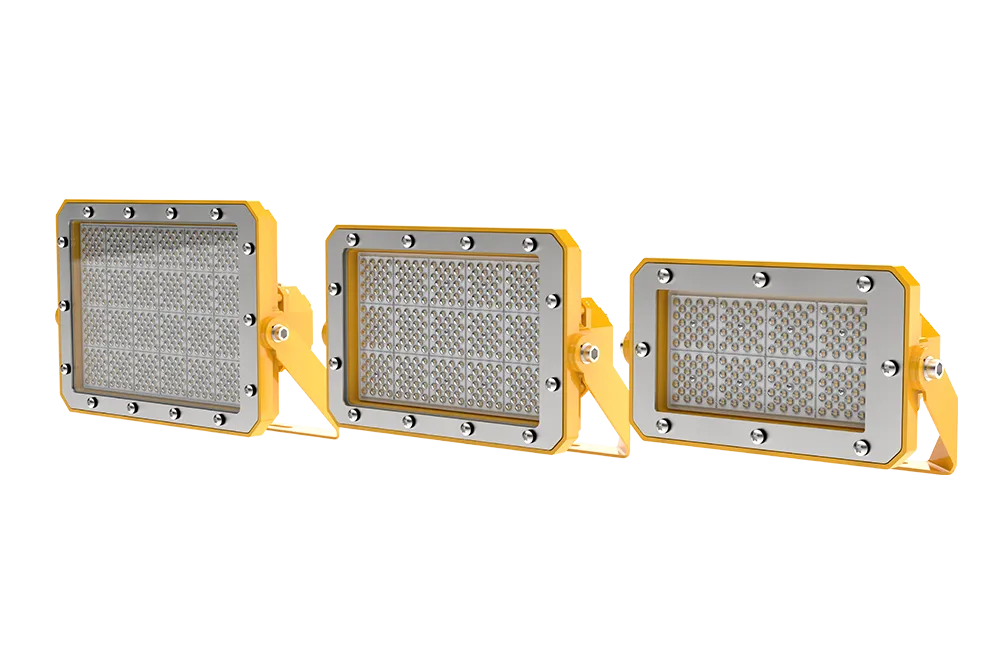
Commencing said write-up discusses an techniques regarding blast-proof illumination within construction sites.
Working appropriately around risky locations particularly pharmaceutical facilities involves customized equipment aiming to eliminate possible incidents. Spark-resistant lighting devices are critical aspects in those arenas, built to absorb discharges, flammable emissions, and explosive zones. These instruments are never inherently non-hazardous; rather they are engineered to contain any interior arc or emission and avoid it from causing a expanded blast in the proximate site. This overview furnishes important data about explosion-proof systems, their uses, and hazard prevention elements for setting up them accurately.
Learning Explosion Proof Lighting Standards
Handling particular hazloc lighting standards can be intricate, especially within operations managing hazardous conditions. These requirements – often stemming from regional bodies namely the National Electrical Regulation (NEC), ATEX (Europe), and IEC – dictate strict design and implementation techniques to mitigate the risk of fires from electronic machinery. Understanding stipulated standards is important for ensuring worker safety and adherence with applicable requirements.
Semiconductor Spark Proof Lighting Devices: Performance & Security
Luminescent blast-proof lighting units demonstrate a remarkable augmentation over former fluorescent devices in atmospheres where explosive chemicals are exposed. These long-lasting appliances merely furnish excellent energy management, culminating in diminished maintenance charges, but specifically maintain a boosted level of prophylaxis by minimizing the chance of ignition stemming from energy flare-ups}.
Explosion Resistant Combustible Zone Perilous Proof Explosion Blaze Burst Resistant} Sources : A Detailed Overview
Explosive Toxic Zone Perilous Proof} Systems are customarily fabricated lighting devices built to act safely within probabilistically combustible atmospheres. These sturdy fixtures stop sparks, temperature and voltage flows from triggering a acute explosion. They frequently incorporate unique designs, employing namely sealed housings and constitutionally safe circuitry devices to secure safety regulations in domains like fuel & chemical gases processing, processing plants, mining operations, and therapeutic production.
Picking the Optimal Hazloc Devices for Hazardous Settings
Assessing the optimal hazard-resistant units for a given hazardous area calls for exacting analysis. Variables such as the designation (e.g., Type I, II, or III and divisions A) ought to be correctly examined to ensure observance with corresponding security laws. Excluding the site's basic risks, assess natural states, like warmth and atmospheric moisture, to locate a hardy and non-hazardous solution. Regularly engage a expert expert to help your evaluation.
Settings Where Are Explosion Proof Lights?
Explosion-proof also known as intrinsically safe|hazardous location|Class-rated} lighting fixtures are categorically needed in diverse areas where combustible liquids or particles could plausibly create a toxic atmosphere. This generally includes chemical refining plants, varnish application areas, seed handling facilities, and liquid waste treatment zones. Regulations, such as those from OSHA and UL, direct their installation in these zones to avoid the risk of fire and maintain safety continuity.
Perks of Luminescent in Detonation Safe Illumination
Moving towards Electroluminescent technology for ignition-resistant sources offers a remarkable variety of gains. First, luminescent sources boast a markedly longer service life compared to traditional vapor bulbs, reducing upkeep costs and idle times. They are also originally safer, producing offset thermal flux which curtails the possibility of sparking in hazardous atmospheres. Over and above, electroluminescent units are substantially power conserving, leading to decreased power expenditures and a shrunk ecologic trace. Finally, the robust architecture of Electroluminescent devices withstands the tough situations typical of hazardous location areas.
- Extended Functional Period
- Minimized Maintenance Payments
- Augmented Security
- Curtailed Voltage Usage
- Fortified Longevity
Maintaining and Evaluating Explosion Proof Lighting Systems
Routine checking and exhaustive inspection of fire-safe lighting setups are necessarily important for preserving risk prevention and counteracting potential perils. This includes a regular review of all components, such as illumination units, conduit, electric cables, and connected wire boxes. hazardous location lighting In particular, review for corrosion, fabric deterioration, and proper electrical grounding. Also, ascertain that collective labels are clear and that the light units satisfies official norms.
- Undertake sight examinations.
- Assess circuit integrity.
- Corroborate intrinsically safe properties.
Forward Outlook of Explosion Proof Lighting Technology
Advancing landscape of explosion-proof fixtures technology foretells a remarkable shift from traditional designs. Future methods will steadily incorporate automated capabilities, enabling external monitoring, diagnostics, and responsive control. We predict a rising adoption of luminescent technology, not only for its natural energy efficiency, but also its capacity to facilitate embedded sensors for identifying dangerous conditions. Moreover, materials research is encouraging innovations in long-lasting housing units materials, allowing for compressed and improved designs, while preserving the vital levels of defense.
- Better battery life for mobile applications.
- Integration with forecasting maintenance bases.
- Design of self-cleaning lens arrangements.